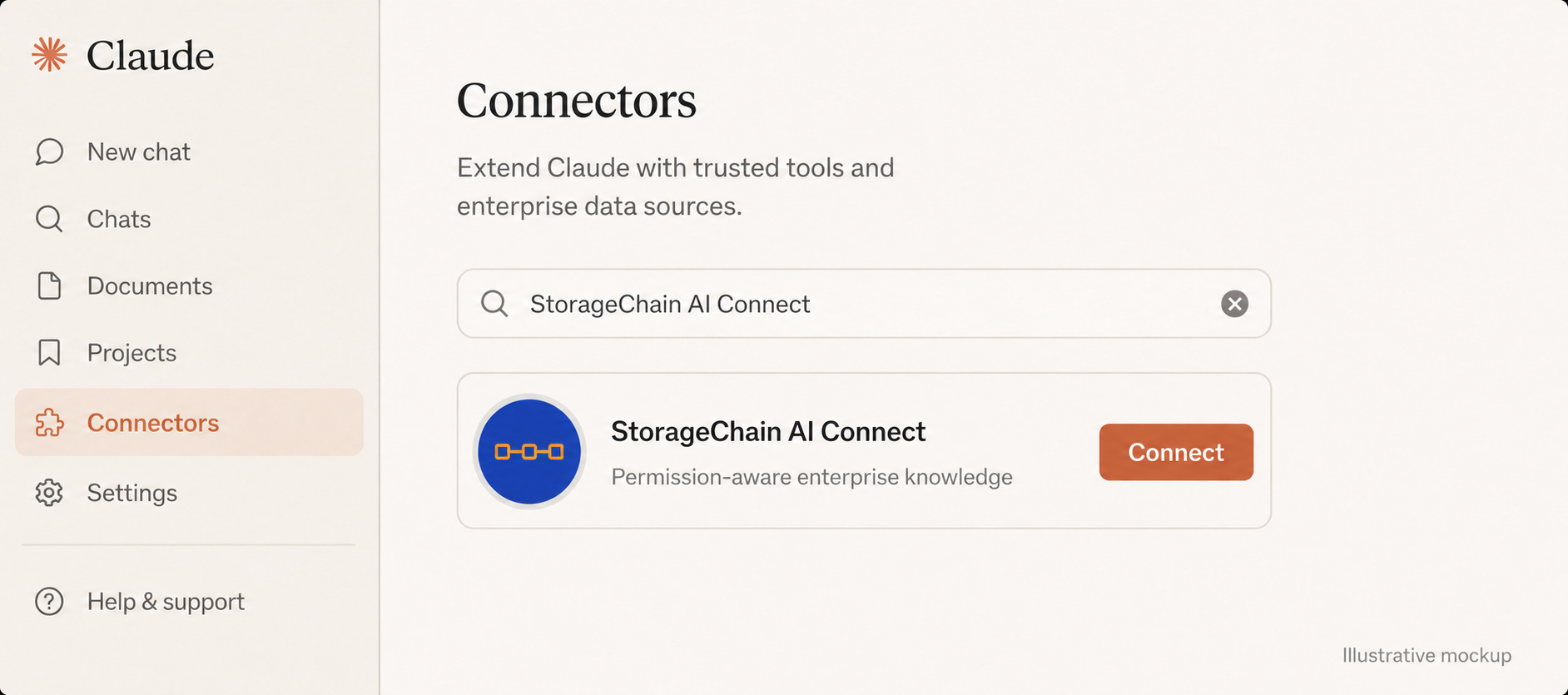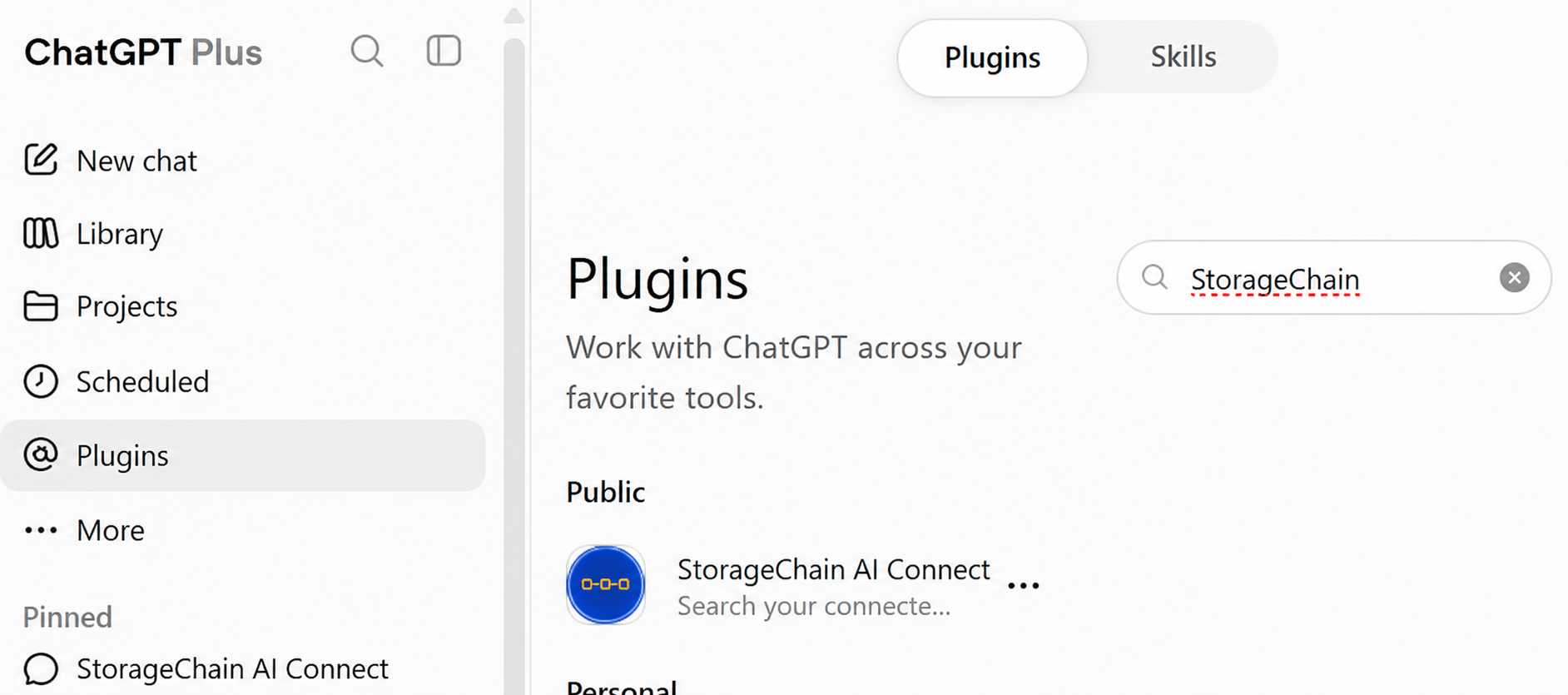

AI Above the Clouds

Search every cloud and control who has access to your data.

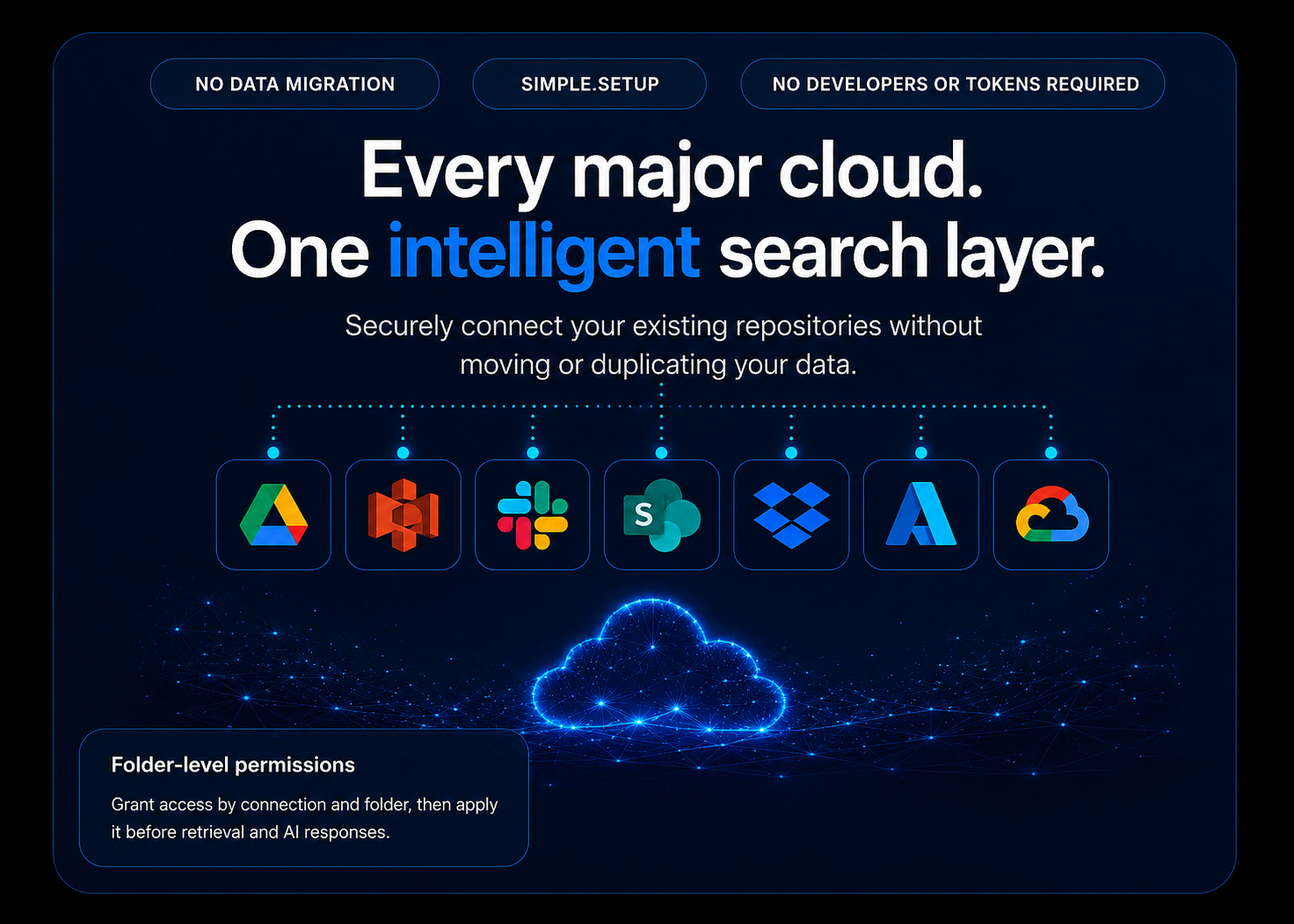
StorageChain Bring Your Own Cloud connects your existing cloud and SaaS repositories to one semantic intelligence layer. Find information by meaning across Slack, Amazon S3, Google Drive, SharePoint, OneDrive, Dropbox, Azure and more without migrating source files.

Cross-cloud semantic searchPermission-aware AIFolder-level user accessAPI-ready for AI front ends
Do not blindly give your company data to Big AI. Control, at every level, what each user, team, customer, partner, or constituent can access and what your AI is allowed to use in an answer.
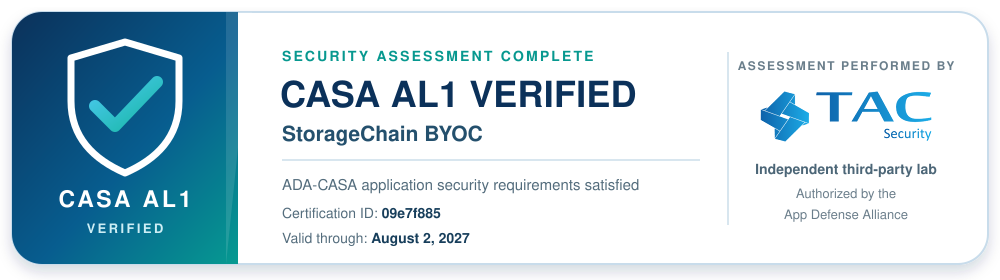
StorageChain BYOC — cross-cloud intelligent search without data migrationCASA AL1 Verified — StorageChain BYOC security assessment
Connect in placeOne search layer across your clouds
Amazon S3Amazon S3
Google DriveGoogle Drive
Google Cloud StorageGoogle Cloud Storage
Microsoft SharePointSharePoint
Microsoft OneDriveOneDrive
DropboxDropbox
Azure Blob StorageAzure Storage
SlackSlack
Why BYOC

Enterprise data is fragmented. AI access should not be uncontrolled.

Valuable information is spread across clouds, drives, folders, channels, and departments. Copying all of it into a general-purpose AI system creates unnecessary custody, governance, and access risk.

The old approach: move, duplicate, and overexpose data.

Single-cloud AI tools and generic model uploads force teams to consolidate content, rebuild permissions, and accept a new system of record.

Cloud and SaaS silos remain disconnectedPermissions are flattened or rebuilt manuallyRaw corporate content enters third-party AI workflows
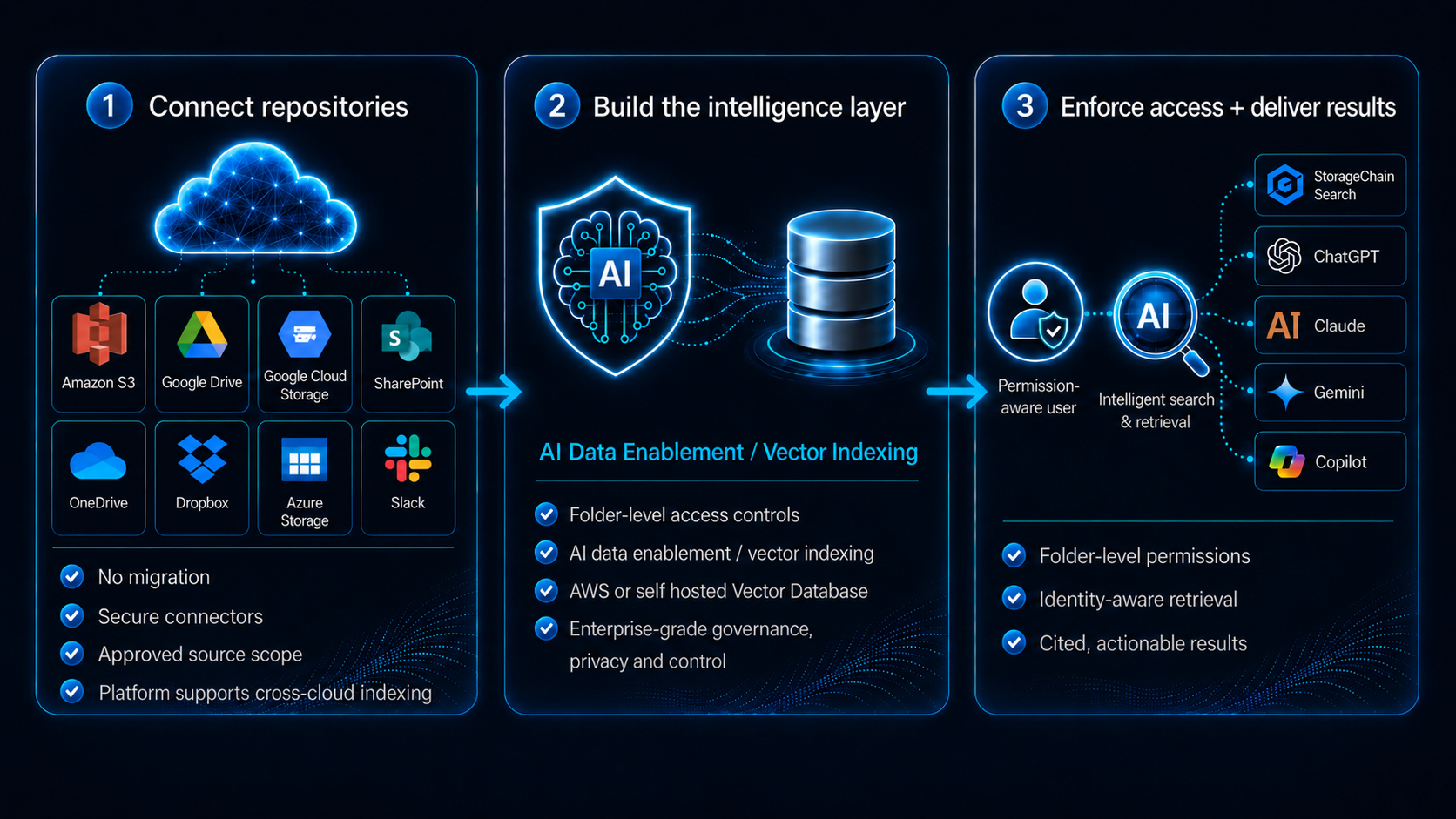
The StorageChain approach: connect in place and enforce access at retrieval.

BYOC indexes authorized content where it already lives, preserves source context, and applies permissions before returning search results or AI context.

One search experience across approved repositoriesOriginal data remains in the customer’s cloudAI answers are grounded only in authorized content
Cross-cloud intelligence

One semantic index across every approved data source.

BYOC uses secure connectors to extract approved content and metadata, create embeddings, and build an AWS-hosted semantic index. Source files remain in their native repositories.

1Connect repositories without migrationUse OAuth, scoped service accounts, source APIs, or custom connectors.
2Index text, metadata, and meaningOCR, chunking, metadata extraction, embeddings, and hybrid ranking.
3Evaluate identity and permissionsFilter search and AI context using the requesting user’s authorized scope.
4Return cited, actionable resultsOpen the original source, pass context to RAG, or call the API from another AI front end.
Amazon S3Amazon S3
Google DriveGoogle Drive
Google Cloud StorageGoogle Cloud Storage
Microsoft SharePointSharePoint
Microsoft OneDriveOneDrive
DropboxDropbox

StorageChain Intelligence Layer

AWS-hosted vector database • semantic + keyword ranking • metadata filters • identity-aware retrieval

StorageChain SearchUnified web and mobile search.
External AI Front EndsAPIs for copilots, portals, and agents.

Users and folder-level permissions

Workspace: Enterprise Data
Live policy preview
Executive & Board
Executives
Legal
Customers
Legal Contracts
Executives
Legal
Customers
Product Documentation
Executives
Legal
Customers
HR & Personnel
HR group
Legal
Customers
Published Resources
Executives
Legal
Customers
Permission aware AI

Control what every user and every AI agent can see.

Add users, groups, service identities, customers, partners, or other constituents. Grant access at the workspace, connection, site, bucket, folder, channel, collection, or item level.

“Control on every level what each constituent has access to.”
Source-native accessMap or inherit repository permissions where supported.
Folder-level controlsGrant users access only to approved folders and collections.
Result-time enforcementRemove unauthorized documents before ranking and AI context assembly.
Cited AI responsesLink answers back to authorized source documents and passages.
Search and filters

Search by meaning. Narrow by the metadata that matters.

Combine natural-language semantic search with exact keywords, sources, dates, file types, owners, folders, channels, tags, security classifications, and other metadata.

Cross-cloud search workspace

Only results authorized for the active user are eligible for retrieval.

Which supplier contracts allow termination after a change of control?
Legal foldersPDF + DOCXModified: 24 monthsPermission approved

Master Services Agreement — Acme Cloud SharePoint

Section 12.3 permits termination upon written notice following a change of control affecting the supplier.

Authorized sourceModified recently97% relevant

Supplier Risk Summary — Q2 Google Drive

References three agreements containing change-of-control termination provisions and notice requirements.

Authorized sourceModified recently91% relevant

#legal-ops contract review thread Slack

Authorized discussion identifying affected suppliers and links to the governing agreements.

Authorized sourceModified recently84% relevant
Connections

Connect the systems your organization already uses.

Use secure, read-oriented connections and limit each integration to the approved account, tenant, site, drive, bucket, folder, channel, container, prefix, or API scope.

Amazon S3

Amazon S3

Connect and index only the approved content within your organization's scope.

Object storage connector
Google Drive

Google Drive

Connect and index only the approved content within your organization's scope.

Workspace connector
Google Cloud Storage

Google Cloud Storage

Connect and index only the approved content within your organization's scope.

Cloud storage connector
Microsoft SharePoint

SharePoint

Connect and index only the approved content within your organization's scope.

Microsoft connector
Microsoft OneDrive

OneDrive

Connect and index only the approved content within your organization's scope.

Microsoft connector
Dropbox

Dropbox

Connect and index only the approved content within your organization's scope.

Collaboration connector
Azure Blob Storage

Azure Storage

Connect and index only the approved content within your organization's scope.

Cloud storage connector
Slack

Slack

Connect and index only the approved content within your organization's scope.

Messaging connector
ENTERPRISE APIs

Bring StorageChain intelligence into any AI front end.

Use StorageChain as the permission-aware retrieval layer behind your chat interface, internal copilot, customer portal, agent workflow, search application, or custom AI experience.

Pass the authenticated user or service identity with every requestApply source, folder, date, file-type, owner, and metadata filtersReturn passages, metadata, source links, scores, and citationsUse results in RAG, copilots, chatbots, agents, and enterprise appsKeep raw source files in your existing cloud repositories
POST /v1/search
// Permission-aware semantic retrieval
const response = await fetch(
  "https://api.storagechain.io/v1/search",
  {
    method: "POST",
    headers: {
      Authorization: `Bearer ${token}`,
      "Content-Type": "application/json"
    },
    body: JSON.stringify({
      query: "Find renewal terms for cloud vendors",
      identity: {
        user_id: "user_1042",
        groups: ["executive", "procurement"]
      },
      filters: {
        connections: ["sharepoint", "gdrive", "s3"],
        folders: ["vendor-contracts"]
      },
      top_k: 12,
      include_citations: true
    })
  }
);
Simple usage pricing

Pay for the data you make AI-searchable.

Estimate your monthly BYOC Intelligence subscription by indexed data volume. Connect repositories, add users, enforce folder permissions, and search approved clouds.

BYOC Intelligence
$0.60per indexed GB / month

Usage-based semantic indexing across approved cloud and SaaS connections. Your source files remain in your repositories.

Unlimited search with every planUnlimited users with every planCross-cloud semantic and keyword searchPermission-aware retrieval and AI contextUser, group, workspace, and folder-level controlsMetadata filters, excerpts, source links, and citationsAPI access for external AI front ends and agents

Monthly pricing calculator

Choose indexed data volume
USD
Indexed data10 GB
Enter any amount in gigabytes.
GB
Estimated monthly subscription$6.00$72.00 estimated annually
Monthly billing

You'll continue through StorageChain's existing secure account and subscription flow.

Enterprise implementation: Connector setup, custom security requirements, dedicated environments, regulated deployments, and negotiated commitments can be quoted separately.
Common questions

BYOC implementation FAQ

Clarifying data location, permissions, users, indexing, AI access, and subscription setup.

No. BYOC leaves source files in your existing repositories. StorageChain creates an intelligence index from approved content and metadata.

Yes. Users and groups can be limited by workspace, connection, site, bucket, folder, channel, collection, item, or another source-supported scope.

The production vector database and semantic retrieval services run on AWS. Your original source files remain in your cloud and SaaS repositories.

Yes. Enterprise APIs can provide permission-approved passages, metadata, citations, and source references to copilots, chatbots, customer portals, agents, and custom apps.

Connectors synchronize content and permission changes on a configured schedule or event basis. Administrators can also trigger a permission refresh or reindex.

Yes. Combine semantic search with exact text and metadata filters such as repository, folder, path, file type, owner, date, tag, language, or classification.

Yes. Create separate users, groups, workspaces, or application identities and expose only approved folders, collections, or published content.

Choose your indexed volume below. New users will be guided through account creation; signed-in users can continue through the existing secure upgrade flow.

Connect your clouds without giving up control.

Unify enterprise knowledge, preserve source ownership, and give every user and AI system only the information it is authorized to retrieve.

Start BYOC